

One of the richest bird regions in Brazil — and you sleep right in the middle of it
Peruíbe is Brazil's first Bird City. Cavalo de Pedra is your lodging base to explore all of it: forest, restinga, mangrove and beach within a few kilometers.
Photo: green-headed tanager recorded on the property by @juklama
From our veranda to the whole municipality
Each number below measures a different area. We make a point of making this clear — because what the region offers is big enough not to need exaggeration.
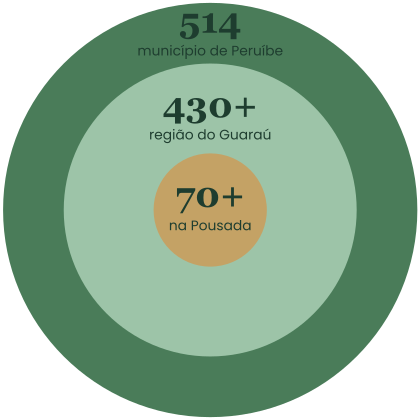
Peruíbe is Brazil's first Bird City
The title is granted by the American Bird Conservancy and by Environment for the Americas, which recognize municipalities committed to bird conservation and to urban planning that favors birds. Peruíbe was the first Brazilian city to receive the designation.
Registered in the Official Gazette of the Municipality of Peruíbe (DOM-E no. 611). The city's official bird symbol: the burrowing owl (coruja-buraqueira).
Four different environments, a few kilometers apart
The region's richness comes from the meeting of ecosystems: hillside Atlantic forest, restinga, mangrove and beach strip — each with its own set of species.
At the inn itself
Gardens, forest edge and the lake attract species right at dawn. More than 70 species have been recorded in here — 30 of them in a single week, most of them before breakfast.
Balça Boardwalk
A wooden boardwalk over the Guaraú River mangrove. It is a recognized eBird hotspot and crosses three different ecosystems: Atlantic forest, mangrove and restinga.
Guaraú and the river mouth
The strip between the village, the beach and the mouth of the Guaraú River concentrates coastal, mangrove and migratory birds — groups you will not find deep in the forest.
Around Juréia-Itatins
The Ecological Station has 367 species catalogued in its Management Plan, across 84,425 hectares of full protection. The trails around it are the way to get to know this environment.
Visiting inside the Ecological Station is restricted by law. Itineraries in the surroundings must be done with authorized agencies and guides from the region.Every month has birds. But winter has more.
We cross-checked the records of the 471 species with data from the Peruíbe–Guaraú hotspot, month by month. The result: the best window runs from May to September, peaking in August — a period that coincides with the dry season, with more accessible trails and fewer insects.
- 253 Jan
- 250 Feb
- 245 Mar
- 269 Apr
- 288 May
- 286 Jun
- 290 Jul
- 305 Aug
- 286 Sep
- 276 Oct
- 254 Nov
- 238 Dec
Number of species recorded per month in the eBird hotspot "Peruíbe–Guaraú", considering the platform's entire history. The difference between the best and the worst month is about 28% — that is, even in December there are more than 230 species in the region. The numbers reflect both bird activity and observer activity.
Some of the species photographed on the property
All the photos below were taken by a guest, inside the inn — no safari lens, no expedition. It is what shows up when you sit down and wait.
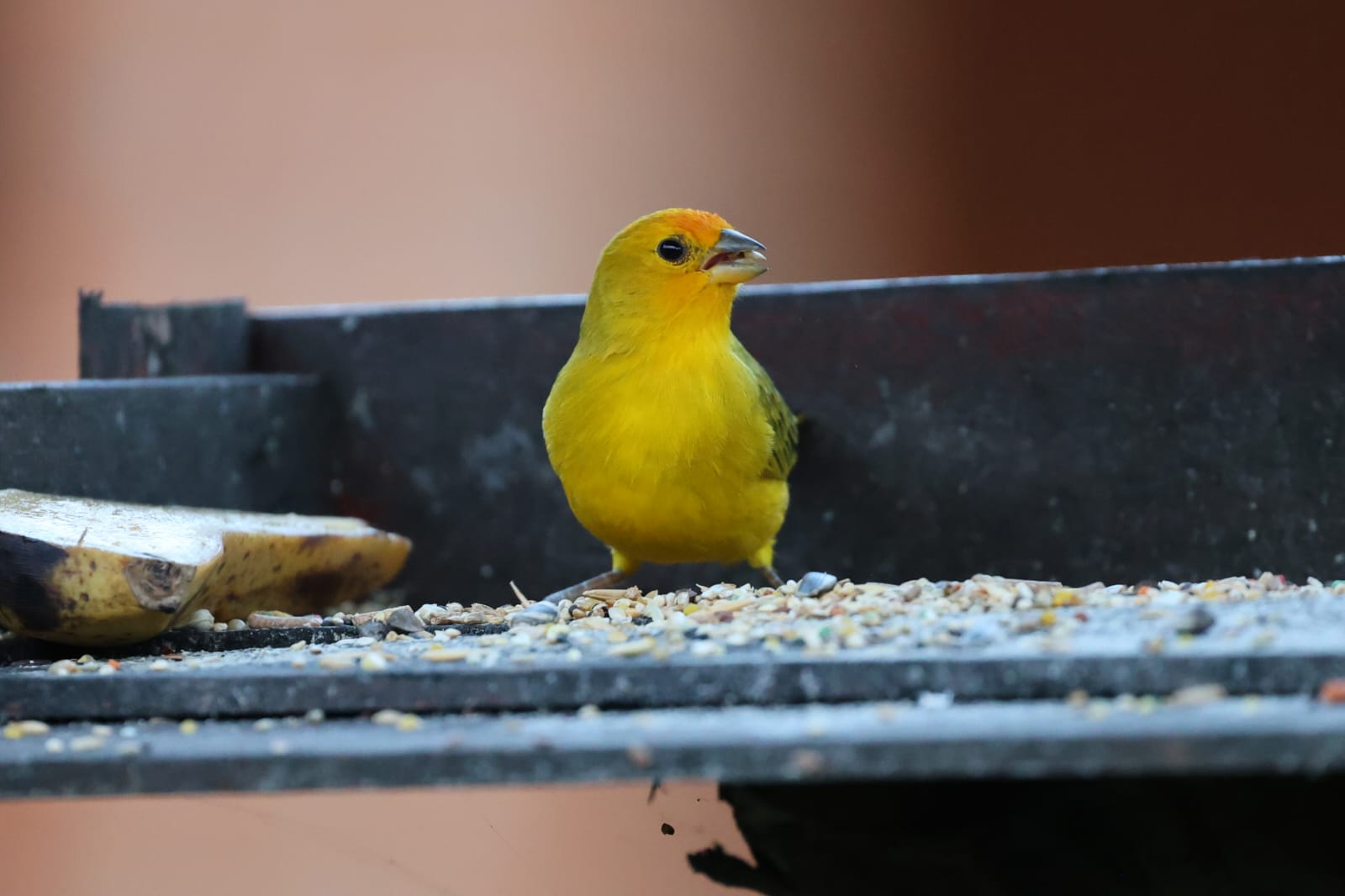
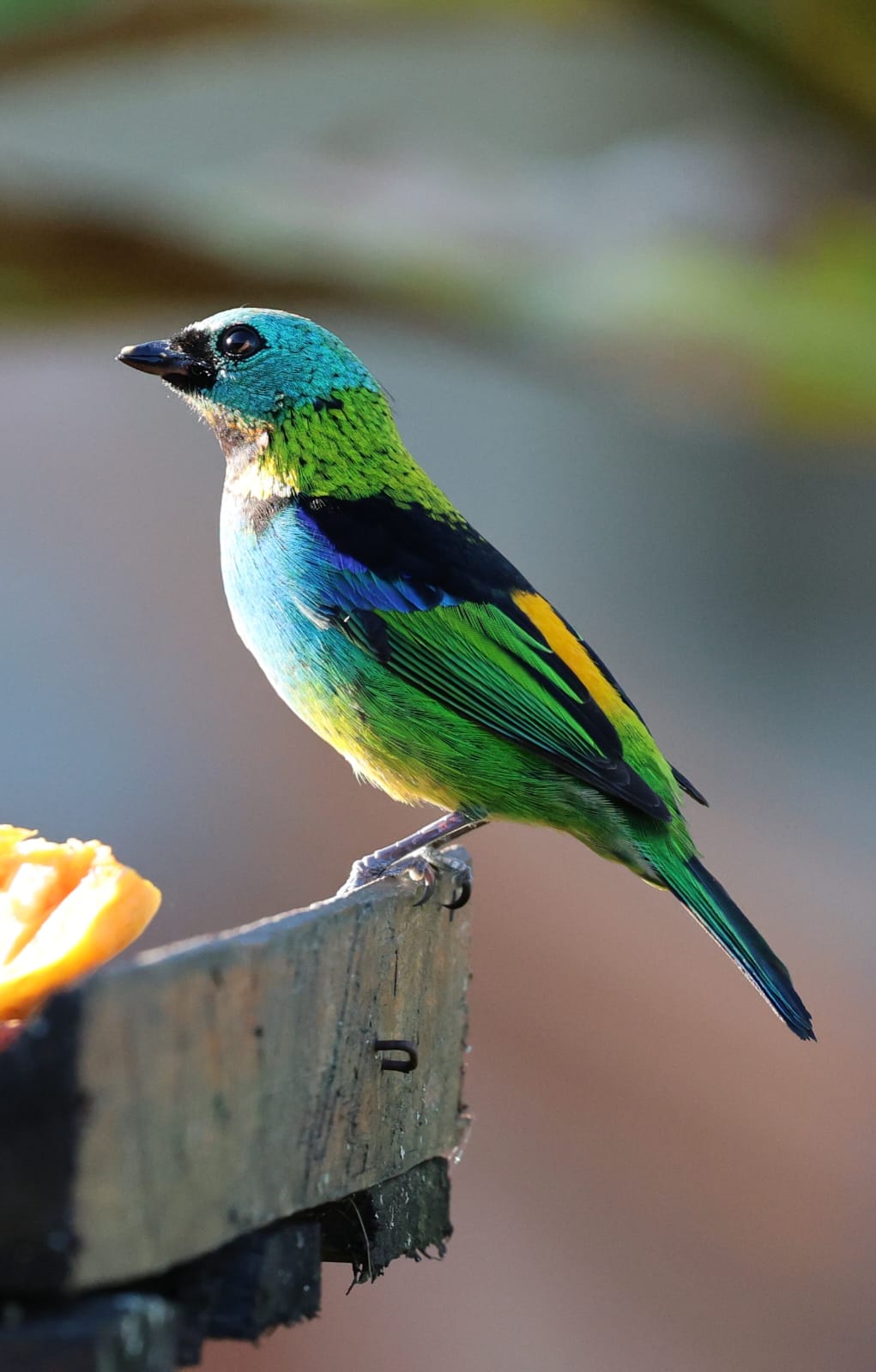
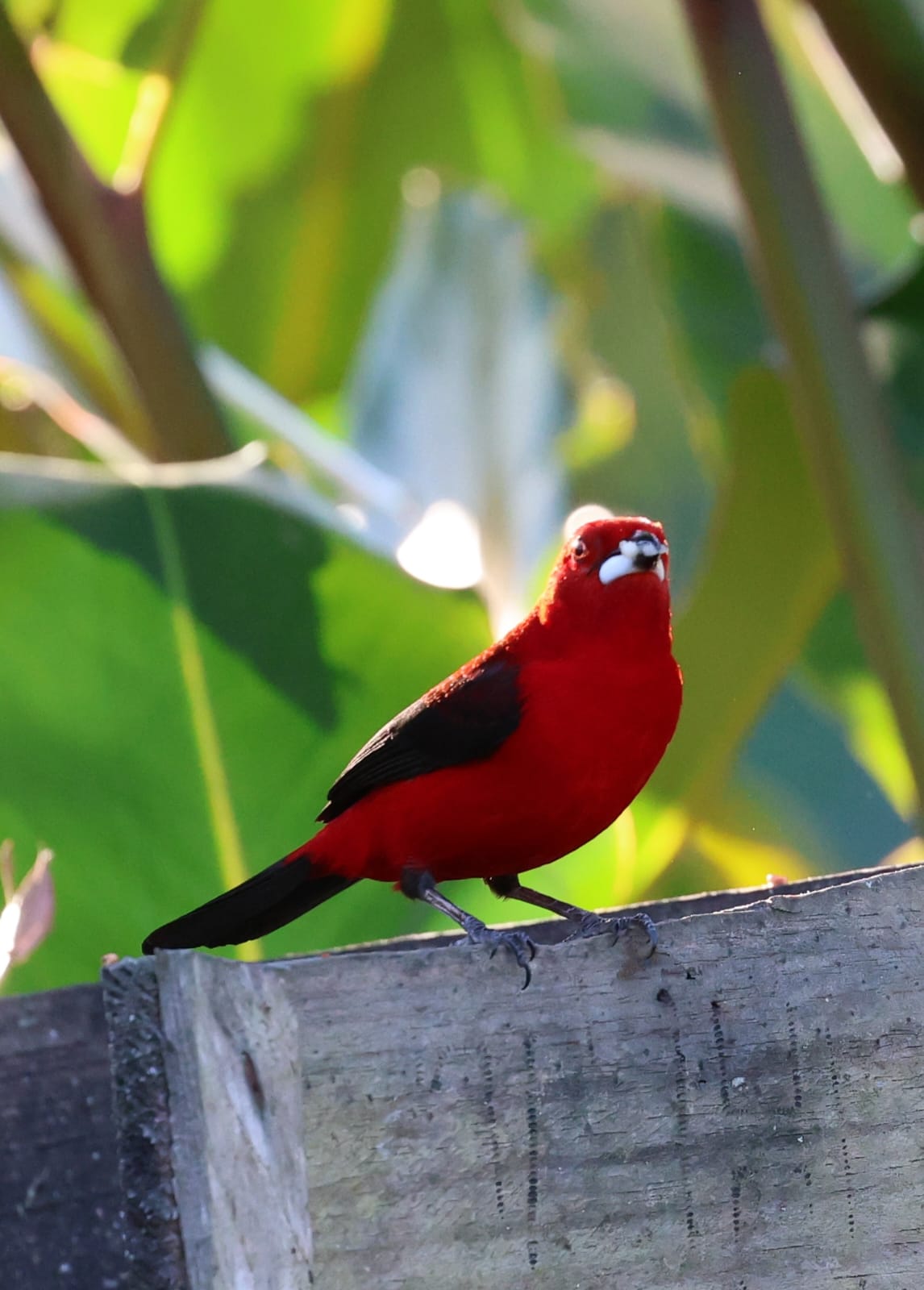
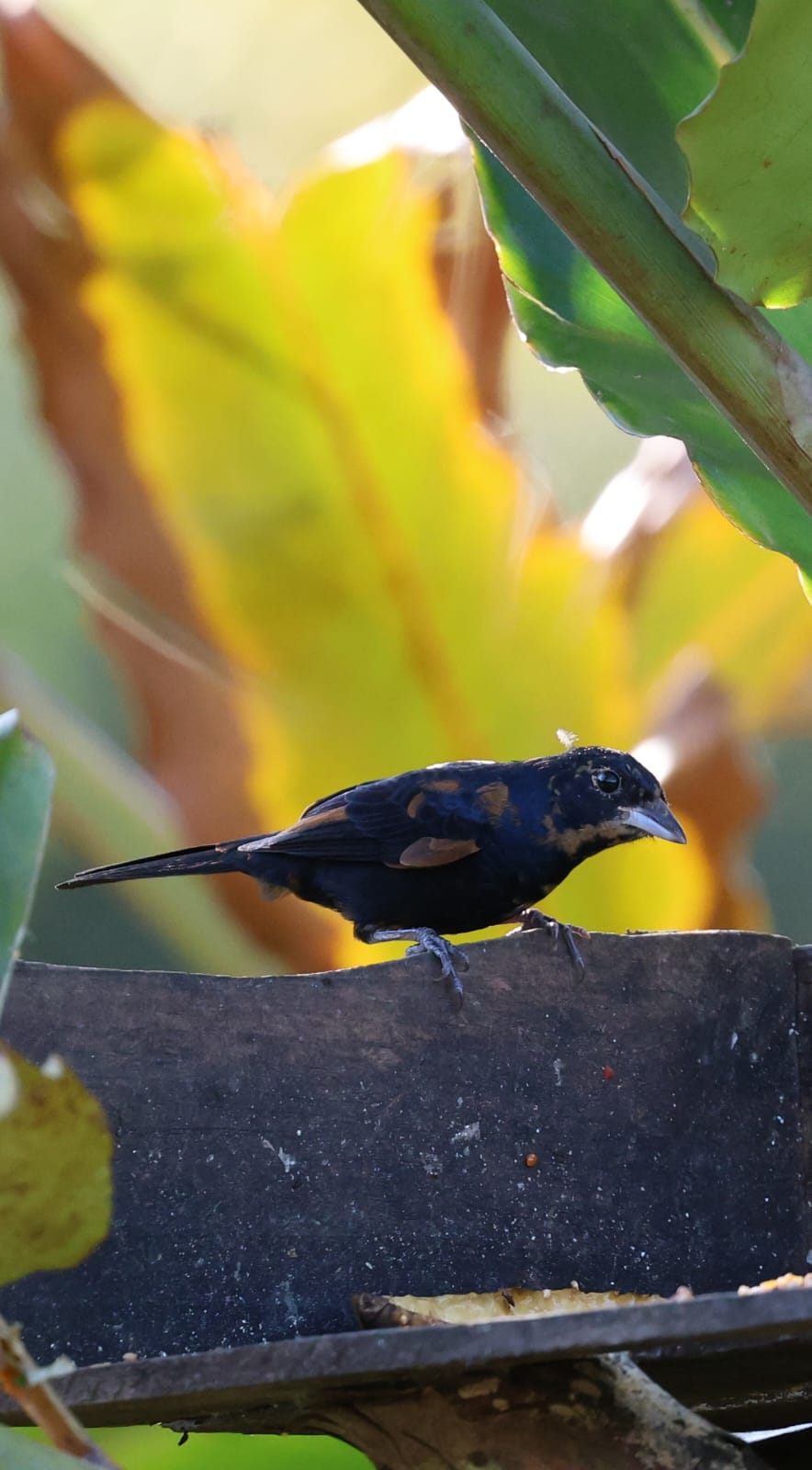
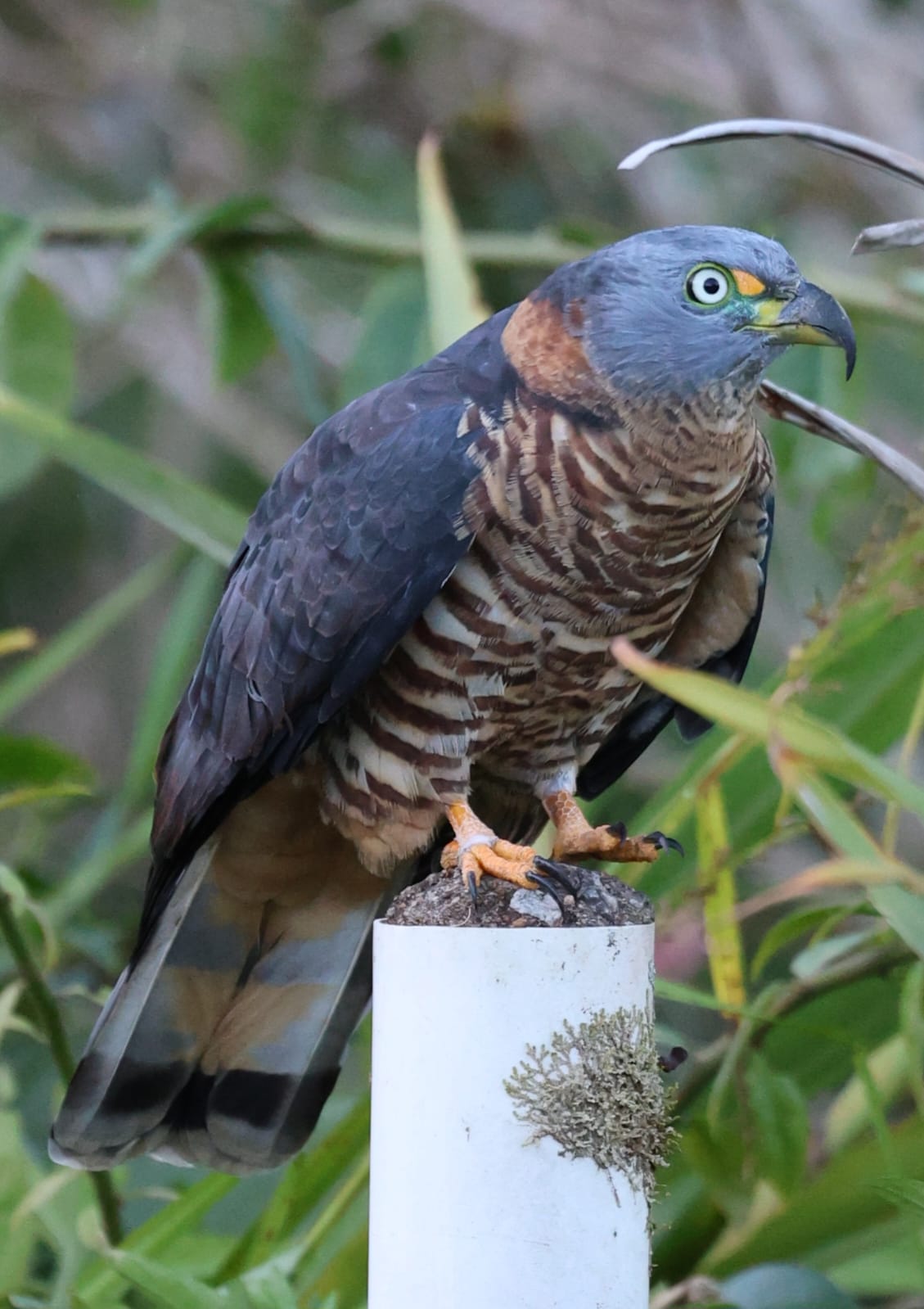
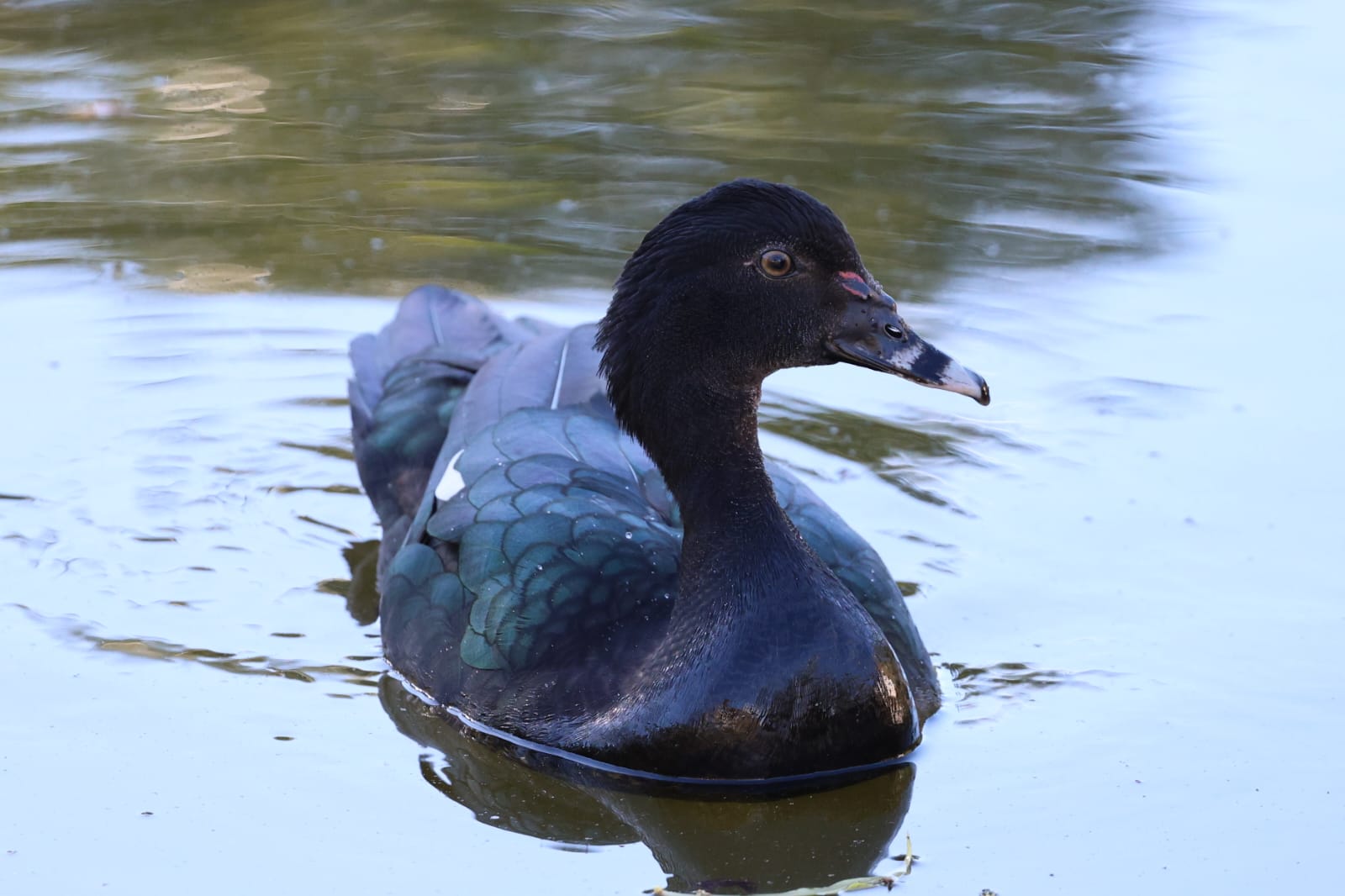
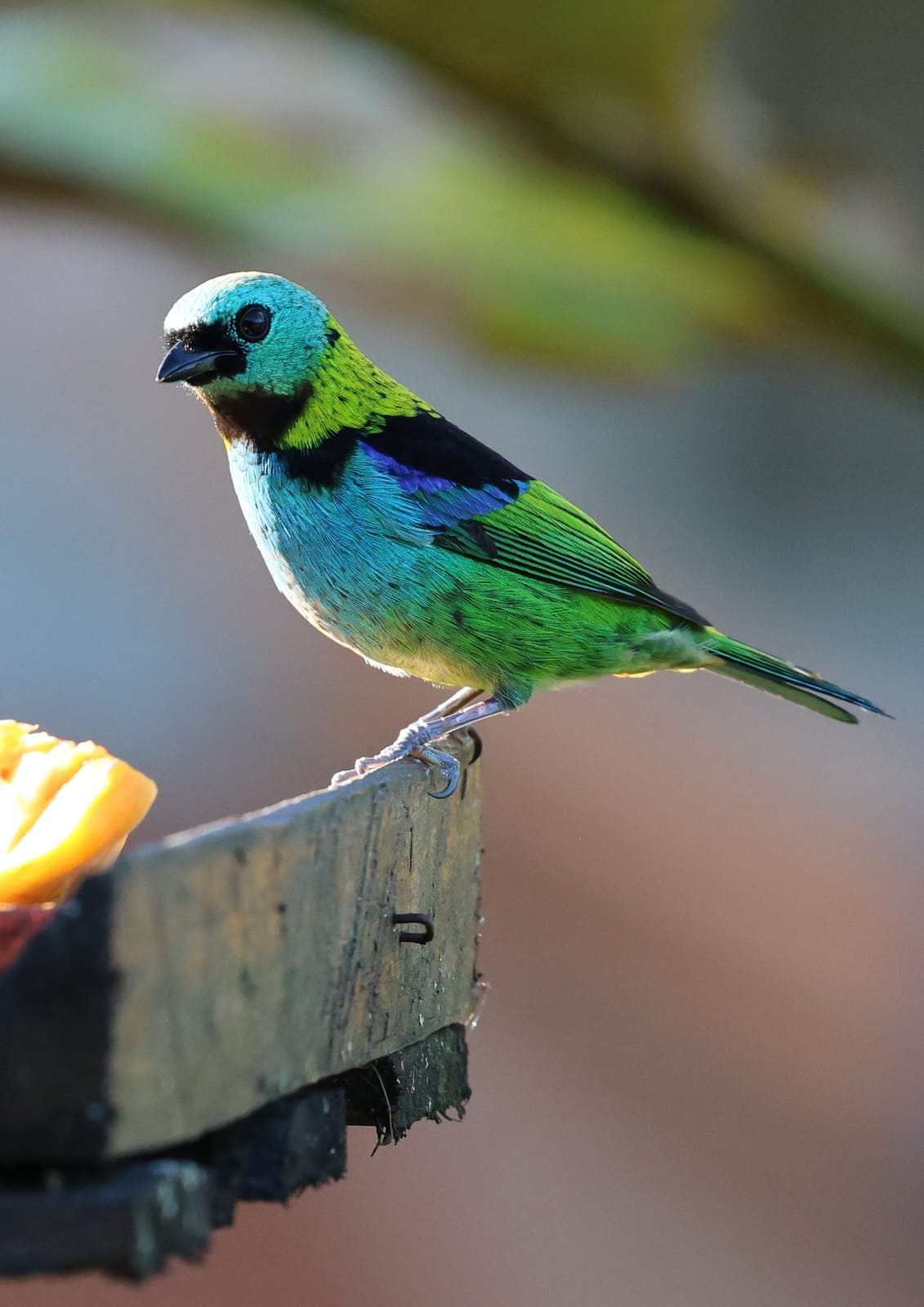
Photos taken by a guest at the inn — credit @juklama
Observer's checklist
Nothing here is mandatory — you can see plenty with just patience and a coffee in hand. But if you want to make the most of it, this is what makes a difference.
-
8x42 binoculars It is the bird watching standard: it magnifies well, stays bright in dense forest and is steady in the hand. The 10x brings things closer, but shakes more.
-
Telephoto lens from 300mm For photography. Below that, the bird usually ends up too small in the frame.
-
Merlin Bird ID downloaded With the region's sound packs saved before you travel — the internet signal here is limited.
-
Headlamp To head out before dawn without occupying your hands.
-
Light, long clothing Long sleeves and light trousers, in light colors. Closed shoes for the trails.
-
Repellent and water A watching outing easily goes past two hours without you noticing.
Bird watching here is on your own: we do not offer a guide service. For guided itineraries, look for authorized tourism agencies in the region.
What helps those who come to watch
Observer's breakfast, at 6 am
Regular breakfast is served from 8 am to 10 am — but those who come to watch birds do not need to wait. By arranging it when booking, we serve an earlier breakfast, at 6 am, so you can already be in the field at the best time of day. Just let us know in advance.
- Download Merlin Bird ID A free app from the Cornell Lab that identifies birds by photo and by song. Download the sound packs before you travel — the signal here is limited.
- Start early The first hour after sunrise is when the forest is most active — the yard is already in motion well before the sun firms up.
- Log it on eBird Your checklists help keep the Peruíbe–Guaraú hotspot up to date and contribute real citizen-science data for the region.
- Repellent and light clothing Long sleeves, light trousers and repellent make a difference — especially at dusk. Prefer light colors: borrachudos (black flies) are attracted to dark colors.
Sources and references for the region
All the data on this page comes from the sources below. If you want to plan your trip in detail, it is worth consulting each one directly.
You explore. We take care of your rest.
Ten simple, quiet rooms, 5 km from Guaraú Beach, near Juréia. No TV, no air conditioning — by choice, so that the sound that remains is the forest's.
Book on WhatsApp